I never thought I’d be thinking about saffron in the middle of a Delhi summer.
It felt too delicate, too refined. The kind of crop that belongs to postcards and poems, not to research notebooks stained with chai and plant physiology notes. But as climate models became headlines and traditional agriculture came under threat, saffron—Crocus sativus—stood out as a symbol of what we’re quietly losing, and what we still have the chance to reimagine.
That was the seed. And like most things in science, it began with a question.
🌡️ Why Saffron? Why Now?
Saffron is one of the most valuable spices in the world, prized not just for its culinary use but also its medicinal properties—rich in compounds like crocin, picrocrocin, and safranal. Traditionally grown in the valleys of Kashmir, it’s a crop with a narrow ecological range and a high sensitivity to climatic variability.
But over the last decade, erratic rainfall, increasing soil salinity, and shorter dormancy periods have made its cultivation increasingly unpredictable. The crop that once flourished in Kashmir’s mild temperate zones is now facing decreasing yields, poorer stigma quality, and increased crop failure.
This isn’t just a climate story. It’s a livelihood story, a cultural story, and a biodiversity story. And it made me ask—can we reimagine where and how saffron grows?
💧 The Idea: Aeroponics as a Climate Solution
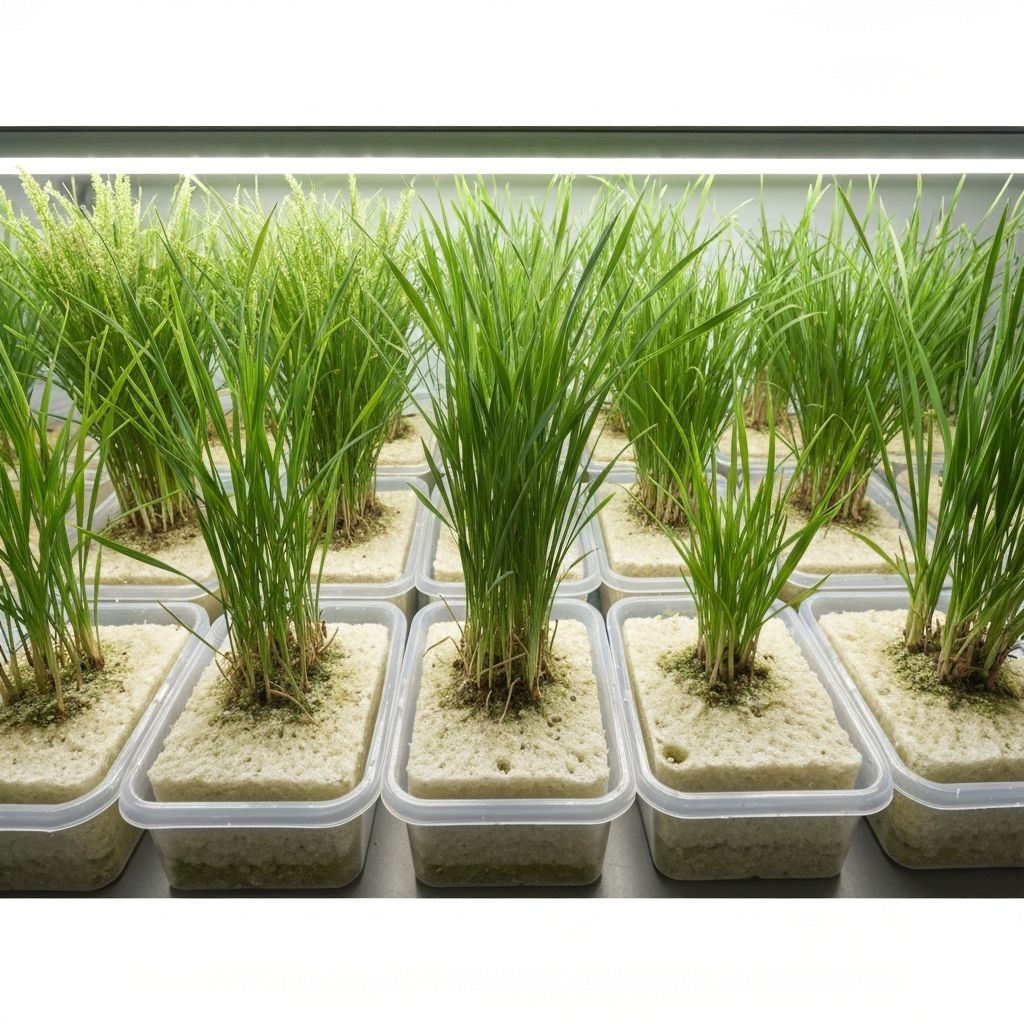
As part of my undergraduate research methodology project, I proposed and designed a theoretical aeroponics system for saffron—a soilless cultivation method where plants are grown in air and nourished by a fine mist of nutrient-rich water.
The reasons were both scientific and strategic:
Water Efficiency: Aeroponics uses up to 70% less water than traditional soil farming—critical in a country where agriculture consumes ~80% of freshwater.
Climate Control: The system allows for microclimate regulation, reducing the impact of external temperature and precipitation changes.
Pest and Soil-Borne Disease Resistance: By eliminating soil, we reduce the risk of rot, fungal infections, and the need for chemical pesticides.
Urban Integration: Vertical, closed-loop aeroponic systems can be integrated into urban or peri-urban spaces, opening possibilities for decentralized cultivation in climatically controlled chambers.
My saffron model was not just a cultivation experiment. It was a climate adaptation framework—a prototype for how we might preserve fragile crops in an increasingly hostile environment.
🧬 What I Learned Beyond the Lab
While I wasn’t working with live crocus bulbs or RNA samples in a wet lab, my work focused on integrating research on:
CsCCD2 gene expression, a key marker for crocin biosynthesis
Environmental stress responses in bulbous crops
Past aeroponic case studies involving leafy greens and strawberries, adapted toward high-value, low-yield species like saffron
I engaged with secondary literature, peer-reviewed models, and comparative system designs, learning how to translate biological understanding into systemic solutions. What began as a botany experiment became a thought experiment in environmental design thinking.
And through that process, I began to see the work not just as science—but as policy. As resilience.
🌍 Reframing Resilience
“Climate-resilient crops” are often framed in terms of yield, hardiness, or genetic engineering. But this project made me think differently.
What if resilience wasn’t just about engineering tolerance into the plant—but engineering care into the system?
What if resilience also meant protecting crops that hold cultural and ecological value, even if they’re not grown at scale?
This project wasn’t just about saffron.
It was about possibility.
It was about what happens when you stop asking, “What’s wrong with this climate?” and start asking, “What can still survive it—and how can we help?”
Saffron became my metaphor.
A plant that doesn’t scream for attention, but still matters.
A reminder that small, exquisite things are still worth protecting in a world that keeps racing toward extremes.
It taught me that innovation doesn't have to be about scale—it can be about sensitivity.
That design thinking and biological empathy can—and should—go hand in hand.
🌱 Looking Forward
This project is still in its early phases—more a blueprint than a field trial. But it’s given me the chance to think across scales:
From molecular pathways to mechanical design
From plant physiology to climate policy
From Kashmiri farmers to urban food futures
It has shown me how agricultural resilience is not just about survival—but about storytelling. About the crops that carry memory, culture, and meaning. And about designing systems that protect the quiet, irreplaceable things—like a flower that blooms in silence, in defiance of heat and loss.
So yes, this was a botany project. But it was also a policy proposal.
It was a statement about what we choose to save when the planet gets hotter.
And maybe—just maybe—it was hope, suspended in mist.
— Sneha 🌾