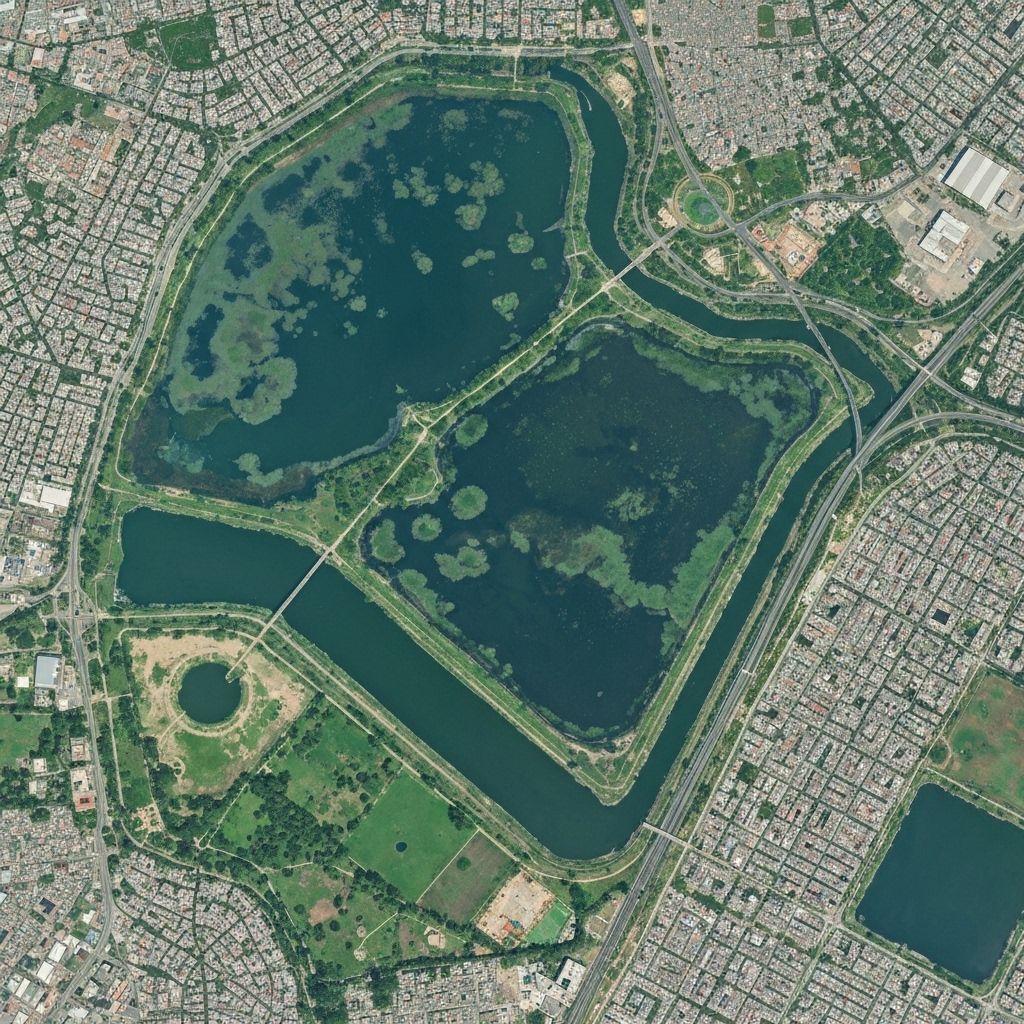
One monsoon afternoon, I stood by the Yamuna near Wazirabad, watching plastic bottles and debris float where lilies once did. It struck me—what if instead of garbage, these waters carried islands of green? Islands that could clean, cool, and heal?
That thought isn’t fantasy. It’s a reality already tested elsewhere. And perhaps, it’s exactly the kind of experiment Delhi needs.
Floating Wetlands: Cleaning While Living
In Chicago, floating wetlands—small, buoyant platforms planted with native grasses—have been used to clean polluted river water and bring back fish and birds. The secret lies in their roots, which dangle into the water, absorbing excess nutrients and providing habitat for aquatic life.
Now picture Delhi’s Yamuna: a river declared “dead” in parts because of untreated sewage. Imagine floating wetlands anchored along the riverbanks—especially near outfalls like Najafgarh drain—quietly filtering water while also giving space for herons, cormorants, and other species to return.
Delhi doesn’t need to replicate Chicago’s design wholesale. Local plants like Typha (cattail) or water hyacinth could be adapted into modules, designed by city-based startups or NGOs, and placed where pollution is worst. Schools and community groups could even adopt a “floating island” each, turning restoration into education.
Sponge Parks: Designing for Floods
Another idea comes from Bangkok’s Benjakitti Forest Park, designed as a “sponge” to absorb stormwater and prevent city flooding. Marshes, ponds, and green depressions act as living reservoirs—urban wetlands that serve people as much as nature.
Delhi’s floods aren’t rare anymore—Yamuna overflow in 2023 displaced thousands, inundating homes and highways. What if instead of concrete embankments alone, the city turned certain low-lying parks into sponge wetlands?
Take Sanjay Lake in East Delhi or parts of Bhalswa’s low grounds—already prone to waterlogging. If redesigned with shallow marsh zones, they could store excess rain, recharge groundwater, and double up as public green spaces. Instead of battling floods each year, Delhi could learn to live with water, just as Bangkok has.
From Policy Gaps to Pilot Projects
Both floating wetlands and sponge parks sound ambitious, but they don’t need to start large. Delhi could launch pilot sites—one floating wetland stretch on the Najafgarh drain, one sponge-park conversion in East Delhi. Success here would create templates to scale across the city.
The real shift needed is in planning. Wetlands today are treated as “leftover” land in Master Plans. If instead they were coded as infrastructure—just like roads or drains—funding and policy would follow naturally. And because both models can be community-led, they bypass one of Delhi’s biggest governance hurdles: fragmented authority.
A Delhi Vision
Standing again by the Yamuna, I imagine not the garbage floating by, but islands of reeds and flowers. Children learning how roots clean water. Parks where ponds hold rain, not just for picnics, but for protection.
Innovative wetland solutions don’t need to be imported wholesale. They need to be reimagined for our soils, our plants, our city. Delhi doesn’t lack ideas. It lacks the courage to turn them into pilots.
And maybe, if we begin with just one floating wetland or one sponge park, the story of this city’s disappearing wetlands could finally change direction—from dust to water, from absence to abundance.
— Sneha 🌱