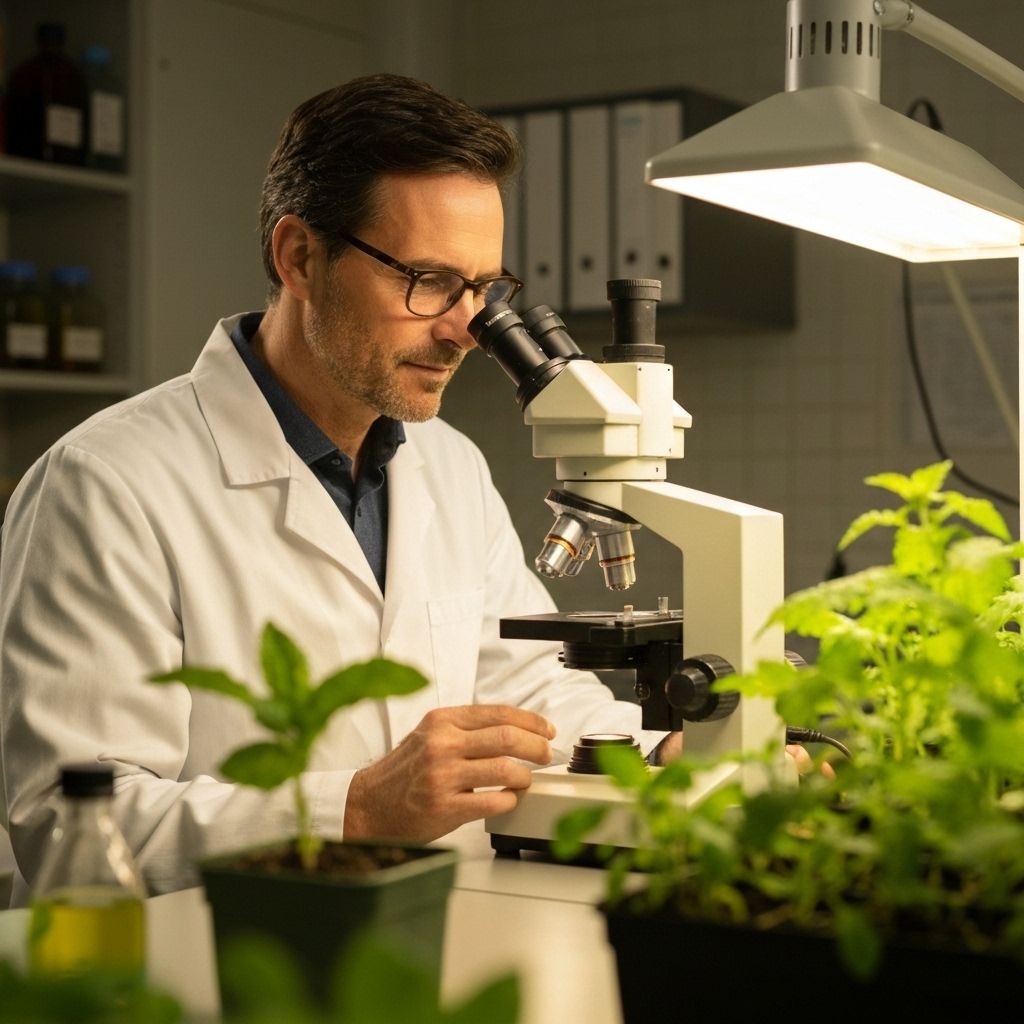
In the lab, I first saw them as dots under a microscope—tiny endophytes living quietly inside plant tissues. Harmless, almost invisible. And yet, the more I learned, the more they seemed like secret partners: microbes that help plants fight stress, absorb nutrients, and grow stronger without needing chemical crutches.
It struck me then—what if the future of agriculture doesn’t come from more fertilizers or pesticides, but from amplifying these invisible allies?
The Microbial Revolution
Microbial inoculants—formulations of beneficial bacteria and fungi—are already being tested as alternatives to chemical inputs. They can fix nitrogen, unlock phosphorus, and even boost plant immunity. Unlike fertilizers that wash off fields into rivers, microbes live within plants, making the partnership efficient and long-lasting.
During my training at the API Lab, I worked with endophytes that showed remarkable resilience-building capacities. They didn’t just help crops grow; they offered a way to reimagine farming systems—lighter on chemicals, heavier on natural intelligence.
Beyond Soil: Hydroponics and Aeroponics
But microbes aren’t only allies in traditional fields. As cities expand and farmland shrinks, methods like hydroponics (soil-less, nutrient-rich water systems) and aeroponics (plants grown with misted roots) are emerging as answers to urban food security.
Here too, microbes can play a role. In hydroponic channels, microbial communities could balance nutrient cycles and reduce the need for constant chemical solutions. In aeroponics, beneficial bacteria might protect exposed roots from pathogens. Imagine vertical farms where every layer is powered not just by LED lights, but by microbial partners quietly keeping the system resilient.
Why Policy Needs to Catch Up
India’s agricultural policies still focus heavily on fertilizer subsidies and large-scale irrigation. But what if incentives shifted towards microbial technologies, farmer training in bio-inoculants, and integrating microbial research into extension services?
Supporting startups working at the intersection of biotech + hydroponics could create new models for affordable, chemical-free food in urban and peri-urban India. For farmers, microbial inoculants could mean healthier soils, lower costs, and protection against climate stress. For cities, it could mean more reliable supplies of clean, pesticide-free vegetables.
A New Kind of Green Revolution
The first Green Revolution gave us yields but at the cost of soil and water. The next one might be quieter—powered not by tractors and fertilizers, but by endophytes, hydroponic setups, and aeroponic towers.
When I think of those dots under the microscope now, I don’t just see microbes. I see a policy opportunity: to align science, technology, and governance around partnerships that already exist in nature. The most powerful allies for sustainable agriculture may not be machines or chemicals, but the invisible ones already living inside plants.
— Sneha 🌱
BLOG 20
Melting Glaciers, Thirsty Cities: What the Himalayas Mean for South Asia’s Future
High in the Himalayas, glaciers have long been described as “water towers” of Asia. They don’t just sit frozen; they melt slowly, feeding rivers that sustain nearly two billion people downstream. But today, those water towers are shrinking at an alarming pace, and the rhythm of their melt has turned unpredictable—too much water all at once, followed by terrifying scarcity.
A Bank That’s Running Empty
Think of a glacier as a savings account. In the summer, it melts a little, releasing steady “withdrawals” into rivers like the Ganga, Indus, and Brahmaputra. Farmers depend on that flow for irrigation, cities for drinking water, and ecosystems for survival.
But rising temperatures are accelerating withdrawals while deposits—new snowfall—are shrinking. The result is a dangerously unbalanced account. Entire valleys now face sudden floods from glacial lakes bursting, while plains below worry about what happens when the ice finally runs out.
Cities Downstream, Caught in the Middle
The impacts aren’t confined to remote mountains. When rivers swell from glacial melt, downstream cities like Patna, Lahore, and Dhaka experience devastating floods. Months later, as flows dry up, those same cities struggle with water shortages.
In Delhi, taps already run dry in summer, and the Yamuna shrinks into a narrow, polluted trickle. Imagine that multiplied across South Asia, where climate models predict that by 2100, up to two-thirds of Himalayan glaciers could vanish.
This isn’t just an ecological crisis; it’s a social and political one. Shared rivers connect nations, but also entangle them in disputes over who gets how much.
Solutions Already Emerging
The good news: people aren’t waiting idly. In Ladakh, engineer Sonam Wangchuk pioneered ice stupas—artificial glaciers shaped like towering cones. They store winter water as ice and release it gradually in summer, helping farmers irrigate fields when they need it most.
In Bhutan and Nepal, early warning systems for glacial lake outburst floods (GLOFs) now alert communities before disaster strikes. Satellites track swelling lakes, drones survey cracks in ice, and local governments practice evacuation drills.
Globally, there are inspiring models of cooperation too. The Indus Waters Treaty between India and Pakistan, despite political tensions, has survived for decades. It shows that shared rivers can bind countries in dialogue, not just disputes. Expanding such agreements with climate adaptation clauses could help nations face the future together.
What South Asia Needs Next
To truly secure water futures, the region will need to:
Invest in storage: build more reservoirs, ice stupas, and recharge systems to capture excess meltwater before it runs off.
Strengthen cooperation: update treaties like the Indus agreement to reflect climate realities and encourage data-sharing across borders.
Shift agriculture: promote crops that use less water and expand techniques like drip irrigation that stretch every drop further.
Protect ecosystems: wetlands and floodplains downstream can act as buffers—absorbing floods and storing water for drier months.
A Future Written in Ice
The glaciers may feel far away, but their fate is already shaping our future. Each ton of ice that melts alters how much food farmers can grow, how safe cities are from floods, and how countries negotiate peace.
When I think of the Himalayas now, I don’t just picture snow peaks. I see a bank account running low, rivers in crisis, and millions of people whose lives depend on rebalancing the system. The glaciers are melting—but our choices, policies, and imagination will decide whether South Asia faces collapse or adapts with resilience.
— Sneha 🌱