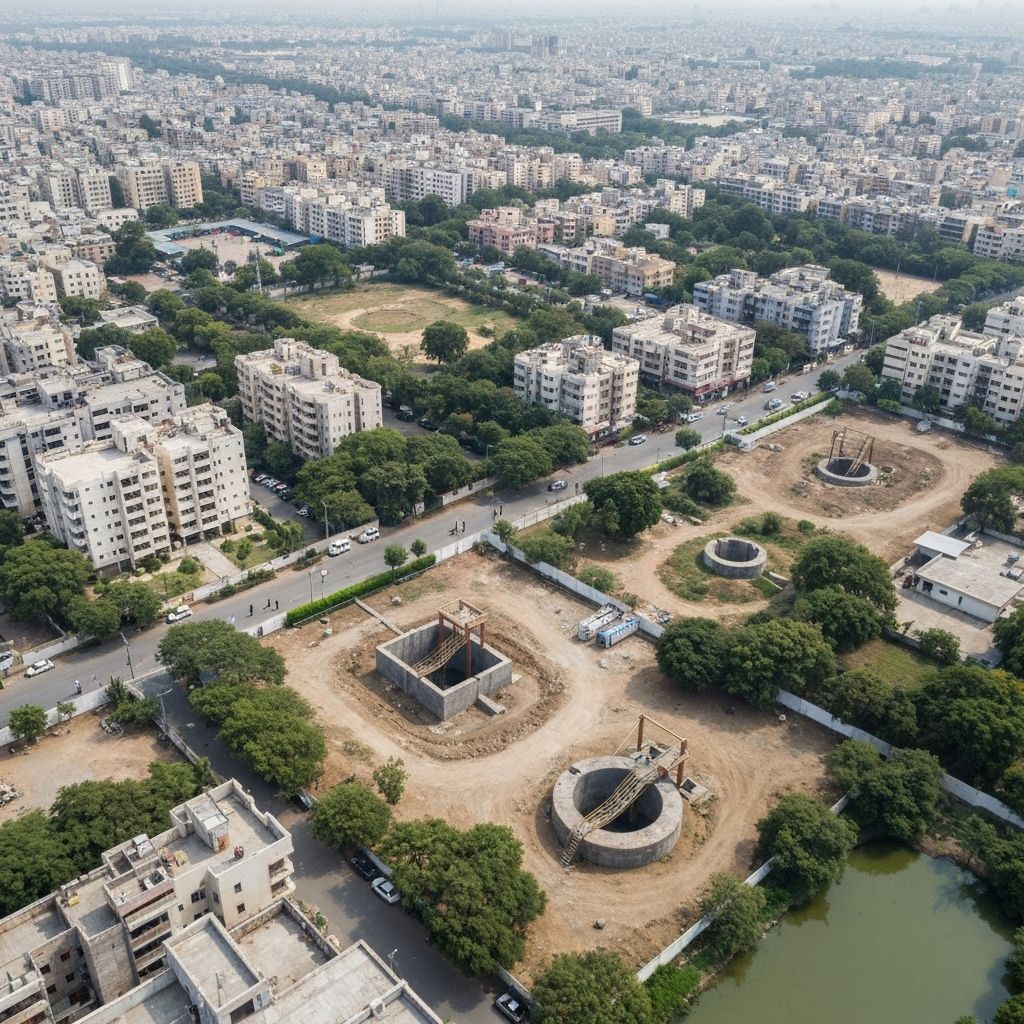
I was standing at the edge of a pond in South Delhi, expecting to see water. Instead, I found dust. The pond had been listed as a “water body” in official records, but in reality, it was a parking lot. Somewhere between the government’s database and the ground under my feet, the wetland had disappeared.
That gap—between policy and practice—is the story of Delhi’s wetlands.
Policies on Paper
India has a framework. The Wetlands (Conservation and Management) Rules, 2017 prohibit reclamation, construction, or waste-dumping in wetlands. The National Plan for Conservation of Aquatic Ecosystems (NPCA) provides funds for restoration. Delhi even has a State Wetland Authority tasked with identifying and protecting sites.
On paper, the protection exists. On the ground, Delhi has lost nearly half its water bodies in two decades. Najafgarh marsh is now a drain. Bhalswa Lake is half-buried under landfill. Many smaller ponds don’t even exist outside government lists.
The rules are there. Enforcement isn’t.
Why the Policies Aren’t Working
Walking back from that dust-filled pond, I thought of three problems:
Fragmented Governance: Wetlands fall between agencies—municipal bodies, the Delhi Development Authority, the Jal Board, the Forest Department. Responsibility is everyone’s, which often means it is no one’s.
Weak Monitoring: GIS maps and inventories exist, but they are outdated, inconsistent, and rarely ground-truthed. A pond marked “alive” in a report may already be a housing colony.
No Community Ownership: Policies imagine wetlands as state property, not as shared commons. Without local involvement, protection remains abstract, disconnected from daily life.
What’s at Stake
This isn’t just about birds or biodiversity. Wetlands are living infrastructure. They recharge groundwater, buffer floods, cool microclimates, and filter pollution. In Delhi—a city facing both water scarcity and flooding—their disappearance is ecological suicide.
And yet, we keep trading wetlands for roads, drains, and real estate. The policy blindspot is not just enforcement, but recognition: wetlands are not “wastelands.” They are our lifelines.
Rethinking Policy for Delhi’s Wetlands
So what can be done?
Update Inventories: Use satellite imagery combined with field surveys to create live, transparent databases accessible to citizens.
Integrate Governance: Assign a single nodal agency for wetlands in Delhi, cutting across municipal and state boundaries.
Link to Urban Planning: Wetlands must be written into Delhi’s Master Plan, not as “vacant land,” but as critical infrastructure.
Community Stewardship: Resident welfare associations, schools, and local groups should be engaged in monitoring and maintaining neighborhood ponds.
Incentives for Restoration: Policies could fund urban wetland revival the way they fund metro projects—because the service they provide is no less vital.
A Different Future
When I think back to that missing pond, I don’t just see loss. I see possibility. Delhi’s wetlands can be restored—Najafgarh marsh could support birds again, Bhalswa could recover as a recreational lake, neighborhood ponds could return as groundwater recharge points.
But only if policy learns to look beyond paper. Protection is not just about drafting rules; it’s about listening to the land and the people who depend on it.
The real test of wetland policy is not how many rules exist, but how many wetlands survive.
— Sneha 🌱