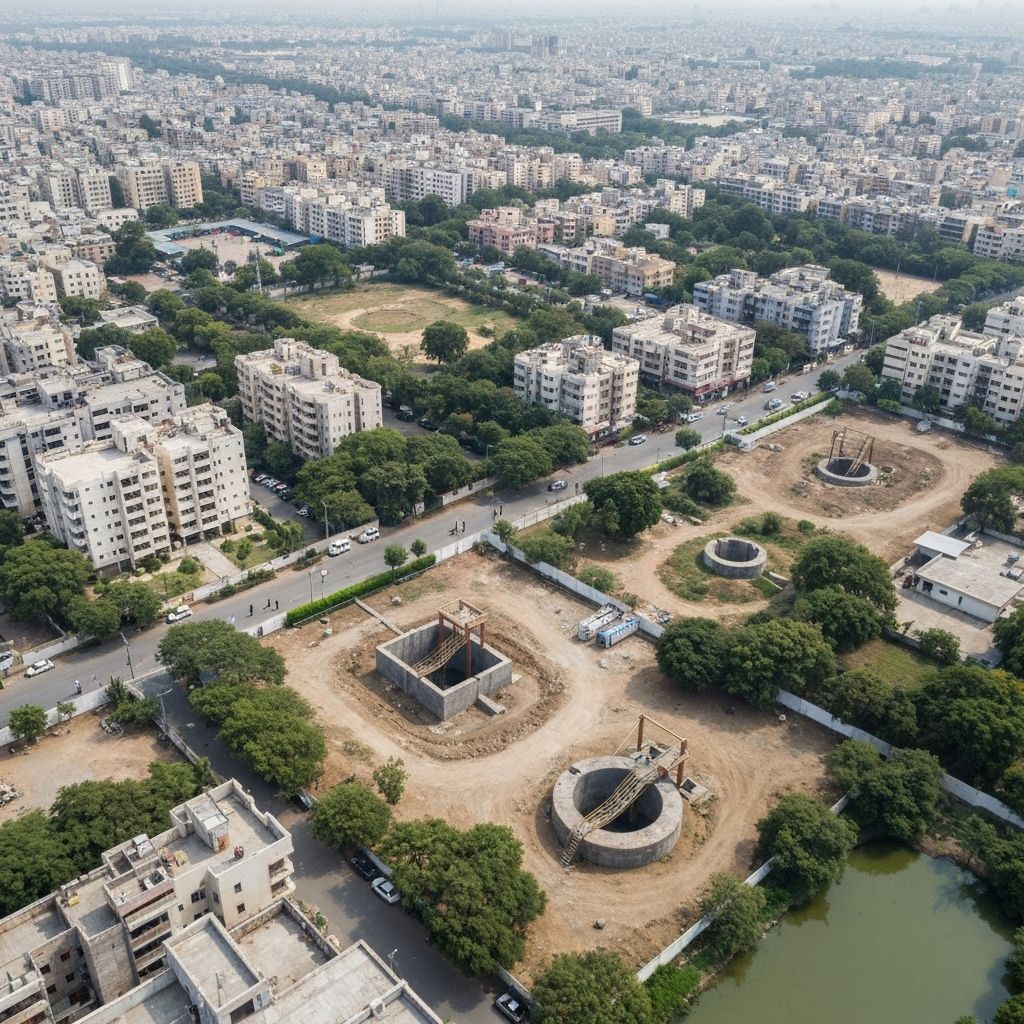
Because cities don’t just grow—they forget. And people are left behind in the gaps.
The word “policy” used to feel big to me.
It sounded like something that lived in government buildings and PDF files—meant for people in suits, not students in rented rooms.
But that changed the day I began looking closely at the place I lived in.
Not from the eyes of a tenant, but from the eyes of a researcher.
And suddenly, my PG—this small, ordinary place I called home—became a case study in what happens when cities grow faster than their systems.
🔍 The Project That Changed How I See Urban Space
It started with a simple question:
Are students living in paying guest accommodations safe—and if not, why?
What followed was a field-based research project across Kamla Nagar, a densely populated Delhi neighborhood known for its student housing.
And what I found was both unsurprising and deeply uncomfortable:
Most PGs had no working fire alarms, let alone extinguishers.
Emergency exits were either locked, blocked, or imaginary.
Lease agreements were vague or non-existent, leaving tenants legally vulnerable.
Water access was irregular and stored in overhead tanks rarely cleaned.
Drainage systems were broken, leading to water stagnation and vector risks.
These weren’t isolated oversights.
They were signs of systemic neglect.
A quiet normalization of risk in spaces students are expected to feel safe in.
🧭 What the Data Didn’t Say, But I Saw
I used surveys, observation checklists, and secondary municipal data to collect patterns.
But what stayed with me were the small conversations:
A girl who said she kept a bottle of water by her bed “in case the fire exits don’t open.”
A PG manager who said, “Nothing has ever happened here, so we don’t bother with drills.”
A landlord who didn’t know a building registration was even required.
This wasn’t about intention. It was about invisibility.
Because when policies aren’t enforced at the local level, they disappear.
📚 Where Governance Breaks Down
The Delhi Master Plan outlines fire codes, drainage layouts, and building safety regulations.
But in informal PG networks, there is a disconnect between policy and implementation.
This is what policy looks like when it slips through cracks:
When land use classifications aren’t updated to match population density
When tenants don’t know they’re entitled to tenant rights
When “informal housing” becomes the default, not the exception
This analysis wasn’t just a safety audit.
It was a window into urban vulnerability.
And a reminder that governance isn’t real until it shows up in people’s lives.
🧠 What This Taught Me About Policy, Equity & Power
This project made me ask deeper questions:
Who is responsible for urban safety when accountability is diffused across landlords, tenants, and municipal bodies?
How do you regulate spaces that exist in legal grey zones?
What kind of policies center youth safety—not just in design, but in enforcement?
And most importantly:
How do we build cities that don’t treat basic safety as a privilege?
What I learned is this: policy is not just paperwork.
It’s about design, behavior, monitoring, and trust.
It’s about ensuring that the promise of safety reaches even the smallest staircase in a back-alley PG.
🌱 The Future is Local—and Layered
We often talk about “resilience” in climate policy.
But this experience showed me that urban resilience begins with regulation, enforcement, and empathy.
Not just disaster response, but everyday prevention.
As I move into the field of environmental governance and urban systems, this is what I carry:
That every city has its fault lines.
That those fault lines often run through people’s lives—quietly, dangerously.
And that the best policies are the ones that don’t just exist.
They show up. They protect. They stay.
— Sneha 🌾