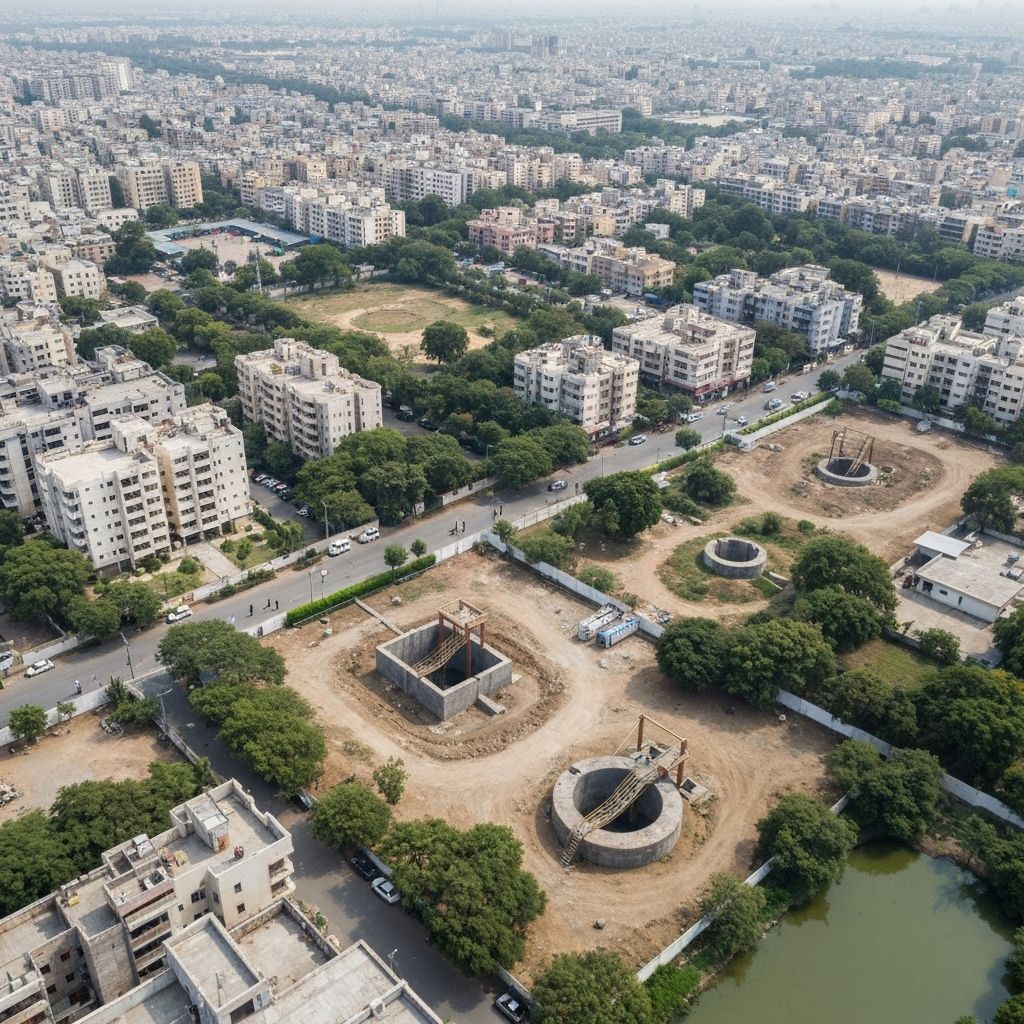
In Jakarta, residents joke grimly that their city is sinking faster than the sea is rising. Streets flood even on sunny days, buildings tilt, and the government has announced plans to move the capital elsewhere. But Jakarta is not alone. From Miami to Manila, coastal cities are learning what it means to live on the edge of a rising ocean.
Sea-level rise is no longer a distant warning—it is here, lapping at doorsteps and creeping into groundwater. For the 600 million people living in low-lying coastal areas, the question is not if their cities will be reshaped, but how.
The Water That Doesn’t Stop Coming
Rising seas are fed by melting ice sheets in Greenland and Antarctica and the thermal expansion of warming oceans. Scientists project an average rise of up to one meter by 2100. That number may sound small, but for flat deltas like Bangladesh or island nations in the Pacific, it is the difference between land and loss.
Cities face a double threat: floods that arrive suddenly with storms, and chronic inundation that slowly seeps into basements, roads, and aquifers. Saltwater intrusion poisons farmland, and coastal defenses crumble under pressure. For millions, home becomes a place where water never quite leaves.
Local Innovations, Global Lessons
Yet, amid the bleak forecasts, there are stories of resilience worth noting.
The Netherlands has reimagined life with water, building not just dikes but floating neighborhoods where houses rise and fall with tides. Parks are designed as water plazas, turning into reservoirs during heavy rains and public spaces when dry.
Indonesia, facing the slow drowning of Jakarta, has experimented with giant sea walls to keep tides at bay, though critics warn that walls alone may push water elsewhere without solving root problems.
The Philippines and Bangladesh are investing in mangrove restoration. Mangroves, with their tangled roots, act as natural storm barriers, breaking waves and holding soil together better than concrete ever could.
Each approach teaches something: engineering can buy time, ecosystems can provide protection, and imagination can reshape how we live with water.
Policy Choices That Matter
Who gets to stay afloat will depend as much on policy as on technology.
Urban planning must stop approving construction in high-risk coastal zones, no matter how tempting the real estate value.
Climate finance must reach vulnerable nations and communities, not just wealthy cities with engineering capacity. Small island nations, though least responsible for emissions, are already bearing the heaviest costs.
Migration planning—still politically taboo—needs to be part of adaptation. Some places will not be defensible, and moving communities with dignity is better than waiting for disaster to decide.
Beyond Walls and Barriers
The temptation is to treat rising seas as a battle we can win with higher walls. But walls eventually break. A more lasting solution lies in combining defense with redesign—living with water rather than only against it. Floating schools in Bangladesh, amphibious houses in the Netherlands, and mangrove belts along tropical coasts point toward a future where adaptation is not retreat, but reinvention.
Choosing Our Future Shorelines
When I imagine Jakarta’s flooded streets, I also think of the choices still available. Rising seas may be inevitable, but sinking cities are not. Every investment in green infrastructure, every policy that values people over property, is a step toward resilience.
The oceans are rising—but the real question is whether humanity can rise with them, building cities that bend, float, and adapt instead of drown.
— Sneha 🌱