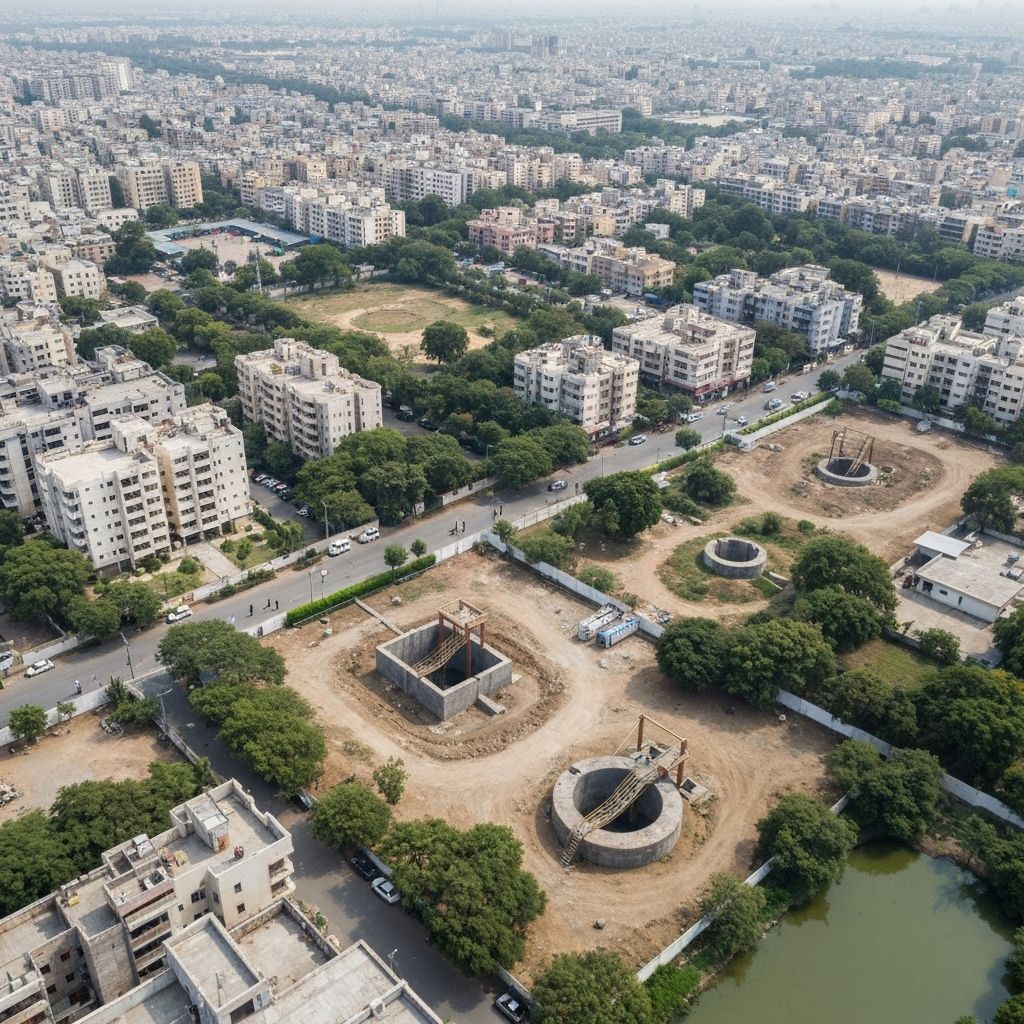
Delhi produces more than 3,200 million liters of wastewater every day. Much of it slips past treatment plants, finds its way into drains, and eventually spills into the Yamuna. What once was a river that nourished the city now carries the burden of its waste.
At first glance, this feels like a story of failure. But around the world, cities are rewriting similar stories—turning wastewater into wetlands, pollution into public space. The question is: can Delhi do the same?
Mexico’s Lesson: Turning Waste into Wetlands
In northern Mexico, the Las Arenitas project began as a simple wastewater treatment experiment. Engineers designed a 99-hectare constructed wetland where plants, soils, and microbes filtered sewage naturally.
Over time, something unexpected happened. Birds arrived—first a few, then flocks. In less than a decade, species counts jumped from 8 to over 160. The site became not just a treatment system but a thriving ecological sanctuary and a learning ground for nearby communities.
The message was clear: wastewater can be more than managed. It can be transformed.
Italy’s Approach: Cities and Wetlands Together
Italy has gone further, building engineered wetlands inside urban settings. These projects treat wastewater while also doubling up as parks and biodiversity hubs. Cost–benefit analyses there showed returns up to ten times the investment—a mix of clean water, restored nature, and public enjoyment.
By blending infrastructure with ecology, these wetlands solved technical problems while creating new civic spaces. Wastewater was no longer hidden underground; it became part of a visible, living cycle.
What Delhi Could Do
For Delhi, these ideas hold enormous promise. Instead of funneling drains directly into the Yamuna, stretches of them could be reimagined as wetland corridors. Reeds, cattails, and bulrushes—plants already suited to Delhi’s climate—could line engineered ponds where microbes and roots filter water before it reaches the river.
Najafgarh drain, today a notorious polluter, could host constructed wetlands along key stretches, allowing oxygen levels to rise and aquatic life to return.
Bhalswa Lake, struggling under leachate and sewage inflows, could be ringed with wetlands that act as natural filters, slowly restoring water quality while creating green buffers for local residents.
These would not replace sewage treatment plants, but complement them—especially vital in a city where 40% of wastewater still goes untreated.
From Infrastructure to Experience
What makes these models exciting isn’t only their function but their form. Constructed wetlands can be designed as public parks, with walking trails, bird-watching hides, and outdoor classrooms. Children could watch in real time how reeds clean water. Residents could see sewage transformed into sanctuary.
Delhi’s drains, usually associated with stench and invisibility, could become places of education and pride.
Steps Forward
A practical path could begin with:
Pilot projects: one drain stretch (Najafgarh or Barapullah) and one lake (Bhalswa) as demonstration sites.
Local adaptation: using Delhi’s own wetland species for planting and relying on simple, low-cost maintenance systems.
Policy integration: recognizing constructed wetlands as urban infrastructure under Delhi’s Master Plan.
Community participation: RWAs, schools, and NGOs co-managing wetlands to bridge governance gaps.
A Different Story for the Yamuna
When seen this way, Delhi’s wastewater is not just a problem—it’s a resource waiting to be reshaped. If Mexico can turn sewage into a bird sanctuary, and Italy can turn it into urban parks, then Delhi too can weave wetlands back into its landscape.
The Yamuna does not have to remain a river of waste. With constructed wetlands, it could again become a river of life—an artery where infrastructure, ecology, and community meet.
— Sneha 🌱